Hedging FX

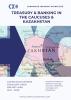
Corporate Treasury & Banking in Armenia, Azerbaijan, Georgia, Kazakhstan & Uzbekistan

Report date: 
26 May 2026

Commentary

The end of empires. With our usual exquisite timing, CompleXCountries held a call to discuss the Caucuses and Central Asia in the very week that China’s President Xi Jinping chose to remind the renowned and erudite classical scholar, Donald J. Trump, that this is an issue which goes back to classical Greece.

This region is not only the site of the ancient Silk Road, which China has been trying to revive for over two decades, but it has also changed hands between the Ottoman Empire and Russia.  Many populations still speak Turkic languages, and, as became apparent, Russian is still the main international language, despite the end of the Soviet Union. With recent events in the Persian Gulf, China’s Belt and Road initiative may still be transformative.

For most MNCs, the region today does not reflect geopolitical tensions: the countries are true “frontier markets”: in all the countries discussed – Georgia, Armenia, Azerbaijan, Kazakhstan, Uzbekistan – only one foreign bank has a presence, and that is limited to Citibank’s office in Kazakhstan. HSBC pulled out of Armenia in 2024. MNCs have to work with local banks, and need local teams to manage the relationships. Peers even have to use local payment acquirers. 

Economically, these countries are generally stable, but not booming. Azerbaijan is the exception with its oil industry. Hard currency is readily available. Remittances out of the region are an issue due to the burdensome bureaucracy which accompanies them, not because of restrictive exchange controls and shortages of hard currency.

One skill, however, is essential to manage business and treasury in these countries: an ability to communicate in Russian, which is still used much more in the region than English. Many of the local banks have web sites which are only in Russian, or have few, if any, staff, who speak English. Every peer on the call has at least one staff member who speaks the language.

Operating issues:

  • Many peers sell from an offshore entity. This simplifies the remittance issue: locally, they often have a representative office. Some peers manufacture the in region, but this is usually restricted to one or two countries.
  • Peers generally found the local banks to be quite ....Please Login / Register to read the rest of this Commentary.
CXC reports are based on confidential peer discussions between senior corporate treasurers sharing their solutions to complex treasury challenges.
Our commentaries, comprising the key findings from the reports are FREE to corporate treasury professionals - simply register here to apply for Basic Membership giving you access to 185+ commentaries and receive new commentaries direct to your inbox.
Our reports, available via subscription or individual purchase, are packed with practical, experience based learning allowing users to benchmark their operations and identify proven, actionable efficiencies - Read our Testimonials Here


Please log in, or create a free account, to read the whole report summary.

Corporate Treasury: Approaches to In-House Banking

Report date: 
21 Apr 2026

Commentary

Cash pooling and sweeping is one of the most basic and widespread tools in modern cash management. To the extent allowed under exchange controls and regulations, it is important to bring all the liquidity into a central entity, and avoid having cash balances earning little to no interest, while some entities are borrowing and paying spreads. 

By definition, this central entity performs the functions of a bank: it is taking deposits and making loans - for tax reasons, it needs to pay and charge interest on the balances. This also means it faces a lot of the challenges banks have: it needs good systems to track the loan balances and calculate and post the interest, and it also needs to ensure any FX exposures are properly identified and managed. Of course, it also needs to have access to sufficient group funding to meet the group’s net cash needs.

Unsurprisingly, once they have set up the relevant structures, many treasurers find they can be used to provide additional functions: POBO (Payment On Behalf Of) is quite common; ROBO (Receive On Behalf Of) exists but is less frequent. Some, but not all, have used their in-house banks to eliminate intercompany netting: any transaction between group companies gives rise to a debit or a credit to their accounts with the IHB, which will be cash settled or not in accordance with regulations and cash management policies. The central entity can also be used for FX management, executing trades with the market and doing back-to-back intercompany hedges. 

In this call, peers went through the systems they use, and gave a frank assessment of the benefits and drawbacks of IHBs – it is not all plain sailing. 


To read the rest of this commentary - please Log In or Register for basic membership (free)


Service providers discussed in this report: 

Please log in, or create a free account, to read the whole report summary.

Corporate Treasury & Banking in China

Report date: 
10 Feb 2026

Log in / Register to read the latest CompleXCountries (CXC) commentary on Corporate Treasury & Banking in China has now been published. It adds to a growing archive of corporate treasury knowledge relating to China - Browse 18 commentaries with associated reports here - all sourced from detailed confidential peer discussions between the treasurers of multinational companies with operations in China - the report  includes approaches and experiences with:

  • Regulatory environment and regulatory uncertainty
  • Engagement with regulators and regional variation
  • Cross-border cash pooling frameworks (SAFE and PBOC)
  • Cash repatriation methods (dividends, pooling, intercompany loans)
  • Trapped cash and liquidity management
  • Use and limitations of cross-border and back-to-back loans
  • Decisions not to implement pooling and alternative structures (notional pooling)
  • Relationships with local Chinese banks versus international banks
  • Service quality and challenges with Chinese banks
  • Role and performance of international banks
  • Domestic cash pooling and cash reporting
  • FX management, interest rates, and bank competition
  • Onshore (CNY) versus offshore (CNH) renminbi markets
  • Short-term investments 
  • Funding structures (equity, intercompany loans, onshore bank loans)
  • Supplier financing programmes and associated regulatory/KYC issues

International banks discussed in the report include: HSBC, Standard Chartered, JP Morgan, Deutsche Bank, Mizuho, Commerzbank and Citi

Chinese Banks include ICBC &  Bank of China

Service providers discussed in this report: 

Please log in, or create a free account, to read the whole report summary.

Banking in India: Relationships & Technology

Report date: 
16 Dec 2025

Please Log in / Register to access this commentary.

The new CompleXCountries report on Banking in India: Relationships & Technology has now been published. The report is based on a detailed peer discussion between senior corporate treasury professionals from Europe and Asia in which they shared and compared their experiences with their relationship banking partners in India with a focus on how the Indian Government's digitisation initiatives are being experienced.

To read our commentary (key findings) please Log in / Register .

The report can be purchased separately or is available via subscription - Enquire Here.

The report covers practical experiences with:

  • Digitalisation
  • Bank Relationships - pricing & performance
  • Global Banks
  • Indian Banks
  • Bank portals & services
  • Bank guarantees
  • FX
  • FX Hedging
  • Tax & Customs payments
  • Funding 
  • Cards / T&E

The banks discussed in the full report include: JP Morgan, DBS, Citi, HSBC, BNP Paribas, Standard Chartered, Barclays, ICICI, HDFC, Kotak Mahindra Bank and State Bank of India

Please log in, or create a free account, to read the whole report summary.

Corporate Treasury, FX & Bank Relationships in Egypt

Report date: 
24 Nov 2025

The full report covers current practices in relation to the list below. To read our commentary (analysis and key findings)  please Log In or Register

  • Foreign exchange regulations and practices
  • Use and management of Letters of Credit (LCs)
  • FX availability 
  • Methods of managing foreign currency flows
  • Payment terms in the market
  • Funding structures and intercompany financing
  • Cash management and liquidity
  • Exchange-rate exposure and losses
  • Corporate legal structures in Egypt
  • Local vs. imported manufacturing setups
  • Bank relationships and banking landscape
  • Geopolitical context and external investments
  • Overall business environment and operating conditions

Service providers discussed  in the full report: HSBC, Citi, Standard Chartered


Service providers discussed in this report: 

Please log in, or create a free account, to read the whole report summary.

Corporate Treasury & FX in Brazil

Report date: 
5 Nov 2025

The full report covers current practices in relation to the list below. To read our commentary (analysis and key findings)  please Log In or Register

  • Changes to IOF tax and its impact on FX, loans, and domestic cash structures
  • FX transaction practices 
  • Cross-border funding and capital structure considerations
  • Potential introduction of dividend withholding tax
  • Viability of including Brazil in a notional pooling structure under new rules
  • Use of boletos and e-boletos for collections
  • Adoption and growth of the Pix payment system
  • FX hedging, interest rates and BRL volatility
  • Use of structured products and offshore hedging
  • Investment of surplus cash
  • Payroll practices 
  • Tax payments
  • Working Capital Finance
  • Bank Relationships: local vs. global banks and service levels
  • Regulatory, tax and operating environment in Brazil

Service providers discussed  in the full report: Bradesco, Itaú, Banco do Brasil, Santander, Citi, JPMorgan, Bank of America, BNP Paribas, Bank Mendes Gans, Deutsche Bank, BBVA, Caixa, FXall and 360T


Please log in, or create a free account, to read the whole report summary.

How MNCs manage Corporate Treasury in Turkey

Report date: 
22 Oct 2025

To read this commentary please Register or Log In.

CXC reports are based on confidential peer discussions between senior corporate treasurers sharing their solutions to complex treasury challenges.

Our commentaries, comprising the key findings from the reports are FREE - simply register to access 150+ commentaries and receive new commentaries direct to your inbox.

Our reports are packed with practical, experience based learning allowing users to benchmark their operations and identify proven, actionable efficiencies - please get in touch for details.

Topics covered in this report include:

  • Turkey’s recent economic conditions and inflation trends
  • Currency depreciation and exchange rate developments
  • Business and regulatory environment in Turkey
  • Tax structure and compliance challenges
  • Funding options and financing practices for companies
  • Use and impact of the Resource Utilisation Support Fund (RUSF)
  • Stamp duty and its implications for loans
  • Inter-company loans and cash management strategies
  • Hedging approaches and accounting under hyperinflation
  • Treatment of interest and foreign exchange transactions
  • Equity funding and capital management in subsidiaries
  • Cash pooling arrangements and restrictions
  • Role of international and local banks in Turkey
  • Bureaucracy and documentation requirements
  • Payment processing and local PSP requirements
  • Overall outlook and long-term confidence in the Turkish market

Banks discussed in this report include: Bank Mendes Gans, JP Morgan, Garanti, TEB, Citi, and ING


Service providers discussed in this report: 

Please log in, or create a free account, to read the whole report summary.

Treasury Management in Argentina

Report date: 
1 Oct 2025

To read this commentary please Register or Log In.

CXC reports are based on confidential peer discussions between senior corporate treasurers sharing their solutions to complex treasury challenges.

Our commentaries, comprising the key findings from the reports are FREE - simply register to access 150+ commentaries and receive new commentaries direct to your inbox.

Our reports are packed with practical, experience based learning allowing users to benchmark their operations and identify proven, actionable efficiencies - please get in touch for details.

Service providers discussed in this report: 

Please log in, or create a free account, to read the whole report summary.

Corporate Treasury: Approaches & Experiences with Multilateral Netting

Report date: 
23 Jun 2025

To read this commentary please Register or Log In.

  • CXC reports are based on confidential peer discussions between senior corporate treasurers sharing their solutions to complex treasury challenges.
  • Our commentaries, comprising the key findings from the reports are FREE - simply register to access 150+ commentaries and receive new commentaries direct to your inbox.
  • Our reports are packed with practical, experience based learning allowing users to benchmark their operations and identify proven, actionable efficiencies - please get in touch for details.


Service providers discussed in this report: 

Please log in, or create a free account, to read the whole report summary.

Pages